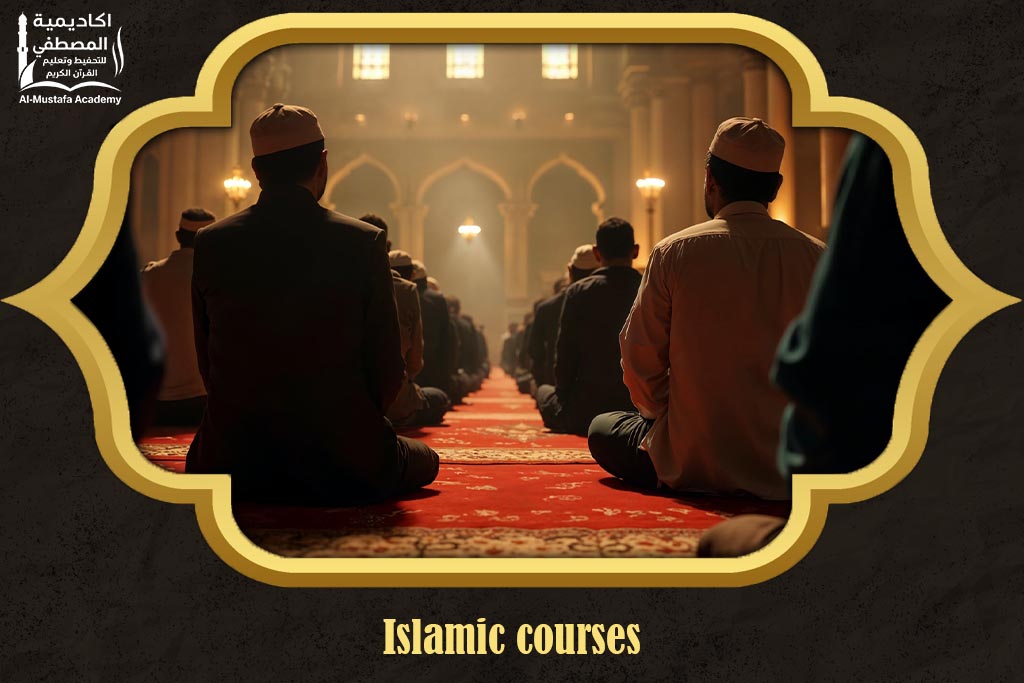
Islamic courses at Al-Mustafa Academy provide a comprehensive and authentic approach to learning Islam, combining traditional scholarship with modern teaching methods. Designed for students of all ages and backgrounds, our courses cover essential subjects such as Quran recitation with Tajweed, Hifz (memorization), Tafseer, Hadith studies, Fiqh, and Arabic language.
Guided by certified scholars and experienced instructors, each lesson is tailored to help learners strengthen their faith, deepen their understanding of Islamic teachings, and apply them in daily life. With flexible online classes, Al-Mustafa Academy makes quality Islamic education accessible to students worldwide.
Define Islamic courses and highlight their role in deepening Islamic knowledge
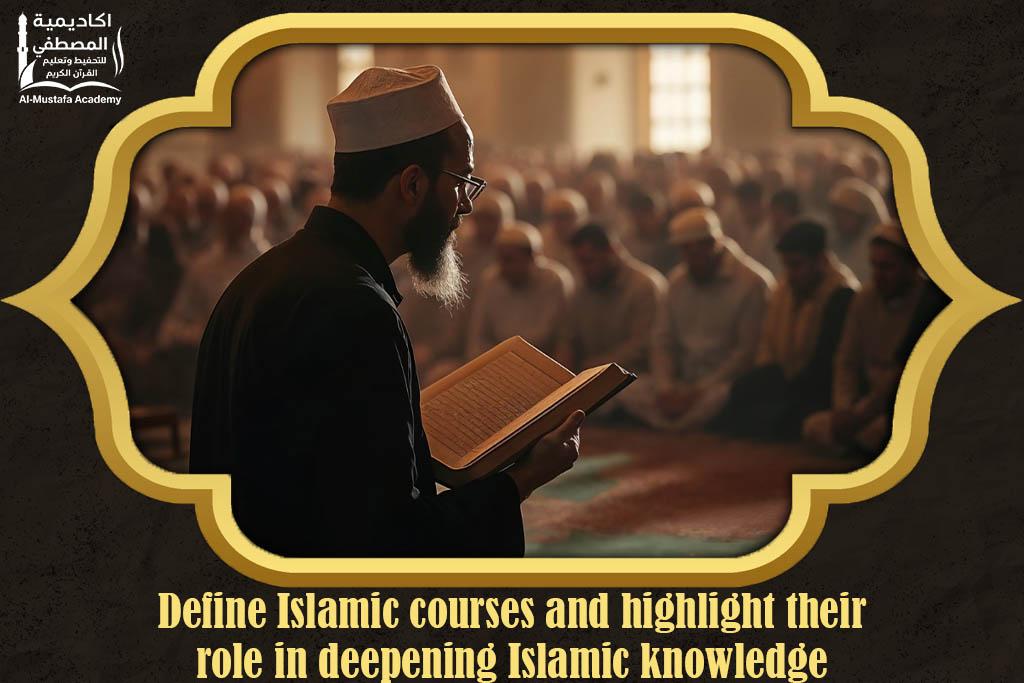
At Al-Mustafa Academy, our Islamic Law Courses provide a comprehensive and methodical approach to understanding Sharia—the divine guidance Muslims believe God revealed to promote righteous living and a just society. The journey begins with an exploration of its two primary sources: the Qur’an, regarded as the direct word of God, and the Sunnah, the sayings and practices of the Prophet Muhammad (peace be upon him). From there, students examine the historical development of fiqh (Islamic jurisprudence), learning how scholars adapted legal rulings to changing contexts while remaining anchored in timeless principles.
A key focus is the distinction between Sharia as eternal divine values and Islamic law as human interpretations shaped by culture, historical period, and legal tradition. Learners study the major branches of jurisprudence, including criminal law, family law, commercial transactions, and ethics. The curriculum also addresses the function of fatwas—scholarly legal opinions that provide guidance on both individual and communal matters.
The course engages with critical and often controversial themes, such as balancing tradition with modern realities, the influence of local customs, and the diversity of scholarly opinions. Contemporary issues—human rights, gender justice, and the application of punishments—are examined with academic objectivity, encouraging students to distinguish between authentic Islamic teachings and cultural or political distortions.
Guided by experienced jurists and scholars, these courses combine authenticity, academic rigor, and practical relevance. By the end, students are equipped not only to understand and interpret Islamic law, but also to apply it in ways that reflect its essential values: justice, mercy, and wisdom.
Al-Mustafa Academy – Begin Your Journey Today
Unlock the doors to authentic Islamic knowledge with Al-Mustafa Academy. Whether you’re starting your first steps in Quran recitation or pursuing advanced studies in Islamic sciences, our expert scholars and interactive online classes will guide you every step of the way. Join a global community of learners, deepen your faith, and gain the skills to live by the Qur’an and Sunnah with confidence.
Enroll today and make your learning a lifelong act of worship.

Online Islamic Courses
At Al-Mustafa Academy, our online Islamic courses are designed to provide students worldwide with a deep and comprehensive understanding of their faith. Through interactive lessons, engaging materials, and expert guidance, learners not only acquire knowledge but also strengthen their spiritual connection with Allah. These programs create a sense of global Muslim community, enabling students to share perspectives and enrich each other’s learning journeys.
Our Curriculum covers all key aspects of Islamic education, catering to beginners and advanced learners alike:
- Comprehensive Islamic Courses (Aqeedah) – Covering Aqeedah, Seerah, Islamic history, the era of the Rightly Guided Caliphs, and authentic Hadith, offering a solid foundation in Islamic principles.
- Qur’an Studies – Including recitation, memorization, Tafseer, and Tajweed, helping students connect with and understand the divine message.
- Fiqh Studies – Offering practical guidance on prayer, zakat, fasting, pilgrimage, marriage, family life, and daily Islamic practice.
- Tajweed Courses – Teaching precise rules of recitation to perfect pronunciation, intonation, and rhythm.
- Seerah Studies – Exploring the life, character, and teachings of Prophet Muhammad (SAWW) in depth.
- Hadith Studies – Examining Prophetic traditions, their authenticity, and their relevance today.
Program Objectives at Al-Mustafa Academy focus on deepening Islamic knowledge, nurturing moral and ethical conduct, promoting spiritual growth, and fostering unity among Muslims.
To track progress, our online classes include assessments, quizzes, assignments, and exams, ensuring students can measure their development and apply what they learn in daily life. With Al-Mustafa Academy’s Online Islamic Courses, every lesson is a step toward living by the Qur’an and Sunnah with clarity, confidence, and purpose.
Read more: Quran teacher
Islamic Studies Course
Our Islamic Studies Course provides a well-rounded learning experience for both adults and children, covering the essential subjects every Muslim should master. These include Aqeedah (creed), Fiqh (Islamic jurisprudence), Hadith (Prophetic traditions), Tafseer (interpretation of the Qur’an), and Islamic History.
Each subject is carefully structured into progressive levels—from foundational knowledge to advanced studies—allowing learners of all backgrounds to advance at a pace that suits them. At Al-Mustafa Academy, we combine authentic Islamic teachings with modern educational methods, guided by experienced scholars who ensure lessons are both accurate and engaging.
We are dedicated to making quality Islamic education accessible and affordable. With flexible schedules, interactive online classes, and a welcoming learning community, students can deepen their understanding of Islam while connecting with fellow learners around the world.
Through this course, you will strengthen your faith, expand your knowledge, and gain the confidence to live by Islamic principles in your daily life.
Islamic Education Courses
At Al-Mustafa Academy, our Islamic Law Courses offer a comprehensive and well-structured pathway to understanding Sharia—the divine guidance that Muslims believe God revealed to help them live righteously and establish a just society.
The curriculum begins by tracing the origins of Sharia to its two foundational sources: the Qur’an, regarded as the direct word of God, and the Sunnah, which encompasses the sayings and practices of the Prophet Muhammad (peace be upon him). Students then examine how Islamic law (fiqh) evolved over the centuries through scholarly interpretation, adapting to new contexts while remaining rooted in core principles.
The program distinguishes between Sharia as eternal, divine values and Islamic law as human interpretations, which can differ based on culture, historical period, and legal school. Learners gain insight into major branches of Islamic jurisprudence, including criminal law, family law, commercial contracts, and ethics. The course also explains the role of fatwas—legal opinions issued by qualified scholars—to address individual and societal issues.
We explore critical and often debated topics, such as the tension between tradition and modernity, the influence of local customs on legal rulings, and the range of interpretations among scholars.
Contemporary concerns, including human rights, gender equity, and the application of punishments, are examined in a scholarly and balanced manner, allowing students to separate authentic Islamic principles from cultural or political distortions.
Led by experienced jurists and academics, these courses blend authenticity, intellectual rigor, and practical insight, preparing students to understand, evaluate, and apply Islamic law in a way that embodies its true essence—justice, mercy, and wisdom.
Learn also: Online Quran courses
Islamic Theology Course
The Islamic Theology Course at Al-Mustafa Academy offers a deep exploration into the intellectual and spiritual foundations of Islamic belief. Designed as a structured program, it traces the development of theological thought from pre-Islamic influences through the Islamic Golden Age to modern interpretations.
Students engage with the core principles and historical contributions of major theological schools, including Muʿtazilī, Māturīdī, Ashʿarī, and Atharī, examining their distinctive beliefs, key figures, and foundational texts.
The course addresses essential and often debated topics, such as divine attributes, the nature of the Qur’an, the relationship between reason and revelation, and the balance between free will and predestination. It also explores the criteria for Aqeedah, the concepts of faith and disbelief, and issues like apostasy and heresy, providing a clear and balanced understanding of complex theological questions.
Guided by qualified scholars, this course blends academic rigor with accessible teaching, making it ideal for anyone eager to strengthen their knowledge of Islam’s rich theological heritage. Through interactive sessions and open discussions, students gain not only theoretical knowledge but also the tools to apply these concepts in their spiritual journey.
Islamic Law Courses
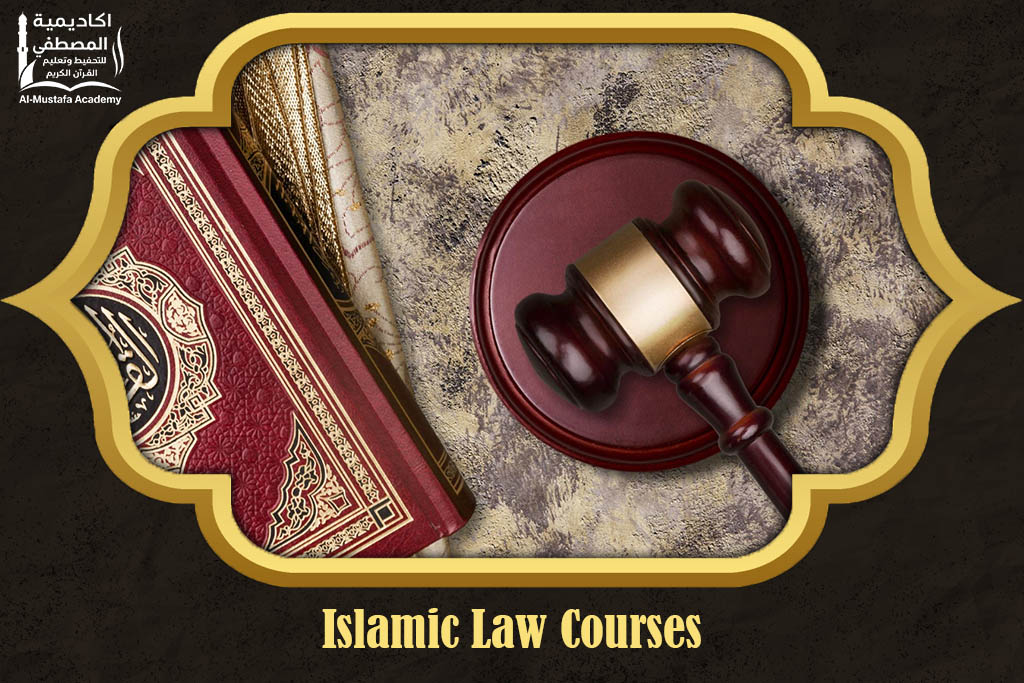
At Al-Mustafa Academy, our Islamic Law Courses provide a clear and structured understanding of Sharia—the divine guidance Muslims believe God has revealed to lead a moral life and build a just society. Students explore the origins of Sharia from its two main sources, the Qur’an and the Sunnah, and learn how Islamic law (fiqh) developed over centuries through scholarly interpretation.
The program examines the differences between Sharia as divine principles and Islamic law as human interpretations that vary across cultures, historical periods, and legal schools. Students are introduced to major areas of Islamic jurisprudence, including criminal law, family law, contracts, and ethics, as well as the role of fatwas in guiding individuals and communities.
Our courses address important and often debated topics, such as the balance between tradition and modernity, the role of local customs in shaping legal rulings, and the diverse interpretations found among scholars.
We also discuss contemporary issues—such as human rights, gender justice, and the application of punishments—in a balanced, scholarly manner, helping students distinguish between authentic principles and cultural or political influences.
Guided by qualified jurists and scholars, these courses combine authenticity, academic rigor, and practical application, equipping learners to understand, analyze, and apply Islamic law in a way that reflects its true spirit—justice, mercy, and wisdom.
In conclusion, Islamic courses at Al-Mustafa Academy offer more than just knowledge — they provide a pathway to living by the principles of Islam with confidence and clarity. By learning from qualified scholars in a structured and engaging environment, students gain both spiritual growth and practical understanding.
Whether your goal is to perfect your Quran recitation, deepen your knowledge of Islamic sciences, or strengthen your connection with Allah, Al-Mustafa Academy equips you with the tools to succeed. With the right guidance, every lesson becomes a step toward embodying the beauty and wisdom of Islam in everyday life.
Read also: Learn Quran Online