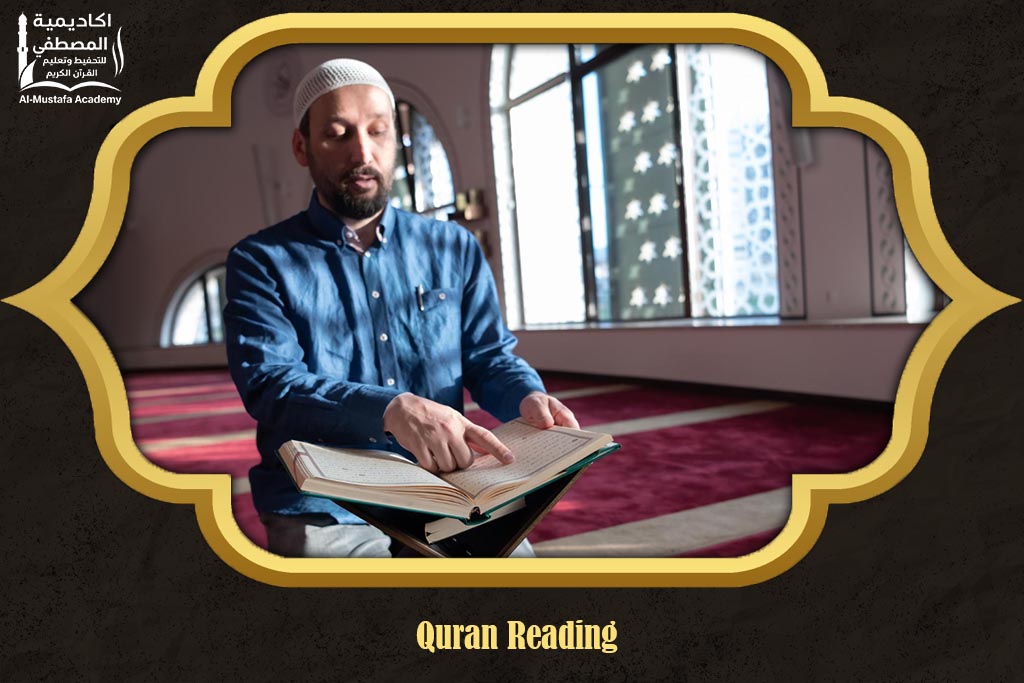
Quran Reading is not just a ritual; it is a profound act of devotion and connection to Allah. For Muslims around the world, engaging with the Quran through reading is a spiritual journey that offers guidance, peace, and a deeper understanding of life.
The beauty and wisdom embedded within the Quran are not only meant to be read but also to be lived. Whether you are a beginner or someone who has been reading the Quran for years, there is always more to discover about its teachings and the transformative power it holds.
In this article presented by Al-Mustafa Academy, we will explore the significance of Quran reading with tajweed , how to approach it with reverence, and the numerous benefits it offers to both our spiritual and daily lives.
Virtues of Reading the Quran
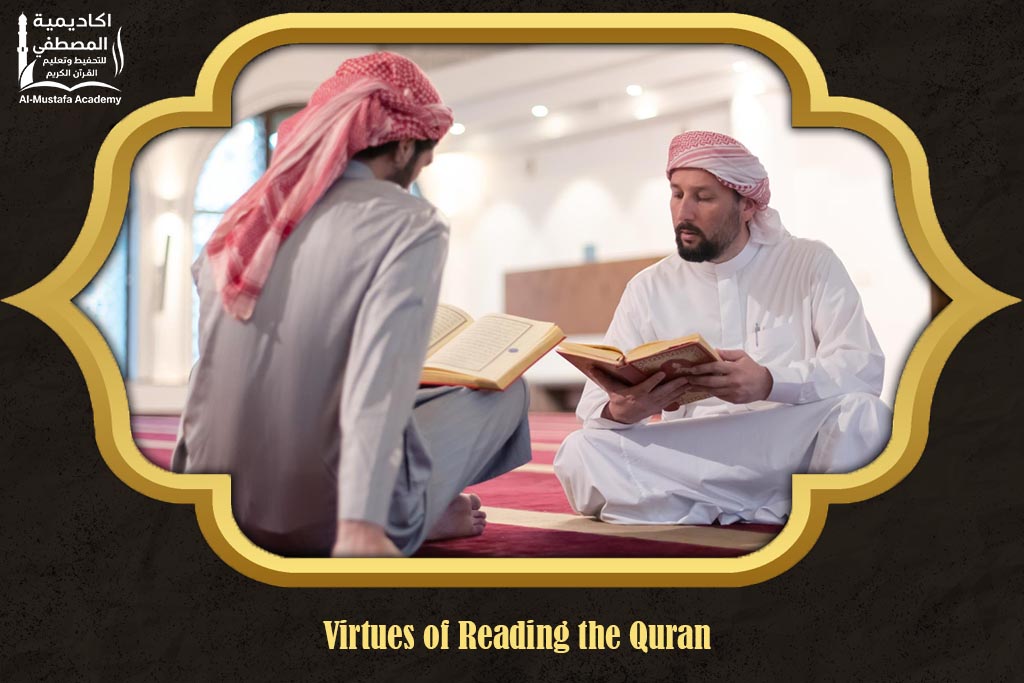
As the blessed month of Ramadan approaches, many Muslims rush to complete the recitation of the Quran. However, it’s essential to reflect on the virtues of reading this Noble Book, as understanding these rewards will further motivate us.
The Quran is full of wisdom that shapes our lives, elevates our character, and impacts our afterlife. Since the Quran was revealed during Ramadan, this month becomes even more special. Let us cherish this divine gift from Allah (swt) and make it our companion to achieve greater spiritual heights this Ramadan. Below are some of the many virtues of reading the Quran:
“This is the Book (the Qur’an), wherein there is no doubt, a guidance for those who are Al-Muttaqoon [the pious]”
(Qur’an 2:2)
Abundant Reward for Recitation
“Indeed, the one who recites the Quran beautifully, smoothly, and with precision, will be in the company of the noble and obedient angels. But for the one who recites with difficulty, stumbling over its verses, he will receive DOUBLE the reward.” (Sahih Al-Bukhari)
This hadith demonstrates the immense value of reciting the Quran, where even those who find it challenging to recite are rewarded for their efforts. During Ramadan, when rewards are multiplied by seventy or more, many Muslims immerse themselves in completing the Quran, benefiting in this life and the next.
The Quran as an Intercessor
“Recite the Quran, for it will come on the Day of Judgment as an intercessor for its companions.” (Muslim)
On the Day of Standing, when fear, anxiety, and scorching heat will engulf us, imagine the Quran standing before Allah, interceding for those who made it their companion in this life, ensuring their entry into Jannah. This is the power of the Quran in our lives—it brings us peace and hope, and intercedes on our behalf when we need it the most.
Soften Your Heart
Reciting the Quran softens the heart and helps one focus on the words of Allah (swt). It humbles us as we read the commands of the Almighty, reminding us of His greatness.
The Prophet (PBUH) once asked Ibn Mas’ud to recite the Quran for him. When Ibn Mas’ud reached a verse that spoke about the Prophet’s (PBUH) testimony on the Day of Judgment, the Prophet (PBUH) was moved to tears. Even the best of hearts, like that of the Prophet (PBUH), were touched by the Quran.
Raised Status
“The best among you are those who learn the Quran and teach it to others.” (Bukhari)
The Prophet (PBUH) described the closeness to the Quran as a mark of high status, both in this life and the hereafter. The more of the Quran one memorizes and understands, the higher their status will be in Jannah.
“It will be said to the companion of the Quran: ‘Recite and ascend (through the levels of Paradise), and beautify your voice as you did in the dunya! For your position in Paradise will be at the last verse you recite!’” (Abu Dawood)
A Guide to What is Right and Wrong
The Quran is a comprehensive guide that teaches what is lawful and what is forbidden in Islam. It also narrates stories from the past, offering lessons of patience, resilience, and faith. Through these stories, we are reminded that Allah is the Almighty, the Most Merciful, and the one worthy of all praise. As the divine words of Allah, the Quran serves as a spiritual compass for Muslims in all aspects of life.
“This is the Book (the Quran), wherein there is no doubt, a guidance for those who are Al-Muttaqoon (the pious and righteous persons who fear Allah and perform good deeds).”
(Quran 2:2)
A Divine Healing and Mercy
“And We send down from the Quran that which is a healing and a mercy to those who believe, and it increases the wrongdoers in nothing but loss.” (Surah Al-Isra, 17:82)
Ibn al-Qayyim (may Allah have mercy on him) said regarding the Quran and Dhikr (remembrance of Allah):
“We have found that the Quran works in ways that physical remedies cannot. When the heart is connected to its Creator, and it turns to Him for healing, it becomes a source of divine remedy. Just as physical well-being supports the body, closeness to Allah and devotion to Him protects the soul, bringing ultimate comfort and peace.”
The Virtue of Reciting the Quran in Ramadan
“The month of Ramadan is the month in which the Quran was revealed, a guidance for mankind and clear signs for guidance and the criterion (between right and wrong).” (Surah Al-Baqarah 2:185)
During Ramadan, the Angel Jibrail (as) would come to the Prophet (PBUH) each night to study the Quran with him. (Bukhari)
May Allah (swt) make us people of the Quran—those who find joy in reciting and learning from this Noble Book, so that it intercedes for us on the Day of Judgment.
By embracing the Quran, we not only find guidance for this world but also secure blessings and rewards in the Hereafter. Let us commit to making the Quran a constant companion in our lives, especially in the blessed month of Ramadan.
This version has been rephrased for clarity and flow, ensuring the message is both respectful and motivational for readers.
What Is Tajweed?
Tajweed ensures that the Quran is recited accurately, beautifully, and exactly as it was revealed to the Prophet ﷺ. This article explores what Tajweed is, why it’s essential, and how it enhances your connection with the Quran. Discover its history, core rules, and learn how to begin your journey with Tajweed today.
Tajweed is a term frequently mentioned when discussing Quranic recitation, but what does it actually mean, and why is it so significant? For many Muslims, reciting the Quran goes beyond merely reading words—it’s an act of worship, a means of spiritual connection, and a way to reflect on the deep messages contained within the Quran. Tajweed plays a crucial role in this profound experience.
At its essence, Tajweed refers to a system of rules that ensures the Quran is recited in the most accurate and beautiful manner possible. These rules guide how each letter, word, and verse should be pronounced, preserving the exact way the Quran was revealed to the Prophet Muhammad ﷺ.
If you’ve ever listened to a skilled Quranic reciter, you can appreciate how moving and beautiful it is when the words of Allah are recited with perfect precision. This is Tajweed in action, and it is something every Muslim can strive to perfect in their own recitation.
Though learning Tajweed may seem intimidating at first, understanding its importance and history can make the journey more rewarding. Tajweed isn’t just about memorizing technical rules; it’s about safeguarding the integrity and beauty of the Quran for future generations.
Whether you’re seeking to improve your recitation or simply want to understand why Tajweed matters, there’s so much to discover.
Read also: what is the quran
The Mean of Tajweed
The term “Tajweed” (تَجْوِيد) comes from the Arabic root “j-w-d” (ج-و-د), which means “to make something excellent” or “to improve.” In the context of the Quran, Tajweed refers to a set of rules that govern the correct pronunciation and articulation of its words. These rules ensure that each letter and sound is recited accurately, maintaining the precision and beauty of the Quranic text.
Tajweed is not just about pronunciation; it is a comprehensive system that ensures the rhythm, fluency, and eloquence of the recitation. By applying Tajweed, reciters can convey the meanings of the Quran in the manner it was revealed, enabling the listener to fully grasp and feel the impact of Allah’s words.
Read more: memorize quran online
Why Is Tajweed Important in Quranic Recitation?
Reciting the Quran with Tajweed is not merely about making it sound pleasant—though this is a natural outcome.
It’s about preserving the Quran’s original integrity. The Quran was revealed in Arabic, and every word, letter, and sound carries a specific meaning and weight. A slight mispronunciation can alter the entire meaning of a verse, and Tajweed helps to prevent such errors.
Here are some key reasons why learning and applying Tajweed is essential:
- Honoring the Quran: The Quran is the final revelation from Allah, and reciting it with care and accuracy shows respect and reverence for the sacred text. Tajweed helps Muslims recite in the same manner as the Prophet Muhammad ﷺ, who recited the Quran with utmost clarity and eloquence.
- Preventing Misunderstandings: Tajweed helps avoid mistakes that may change the meaning of a verse. For example, mispronouncing a sound or elongating a vowel can lead to a completely different interpretation of the text.
- Enhancing Spiritual Connection: Many Muslims find that reciting the Quran with Tajweed enhances their spiritual experience. The attention to detail in reciting each word leads to a deeper reflection on the verses, making the recitation feel more immersive and meaningful.
- Following the Sunnah: The Prophet Muhammad ﷺ emphasized the importance of correct recitation. He said, “Whoever does not recite the Quran in a beautiful manner is not one of us.” (Sahih Bukhari). By learning Tajweed, we follow the example and teachings of the Prophet ﷺ.
Core Rules of Tajweed
Tajweed is a vast science, but here are some of its fundamental rules that guide proper Quranic recitation:
- Makhaarij (Articulation Points): Every letter in the Arabic alphabet has a specific point of articulation, which affects how it is pronounced. Some letters are pronounced from the throat, while others are articulated from the tongue or lips.
- Sifaat (Characteristics of Letters): Each Arabic letter has distinct characteristics, such as being heavy or light, sharp or soft, which affect the sound and tone when recited.
- Idgham (Merging Letters): Sometimes, letters are merged or blended in recitation to maintain a smooth flow without interruption.
- Ghunna (Nasalization): Certain letters require a nasalized sound when pronounced, which affects both the duration and quality of the recitation.
- Madd (Elongation): Some vowels and letters are elongated for emphasis, which can change the intensity or meaning of a verse.
For more information on Tajweed terms, you can refer to Our academy Al-Mustafa Academy
How to Start Learning Tajweed
While Tajweed may seem overwhelming at first, there are now many accessible resources to make learning easier. Traditionally, Tajweed was taught by a teacher who would guide the student through the articulation points and the characteristics of each letter.
Today, in addition to personal instruction, there are various Quran reading online platforms, videos, and books that offer step-by-step lessons on Tajweed.
For beginners, it’s essential to focus on mastering the foundational rules before progressing to more complex aspects. Consistent practice is key, and recording your recitation can help identify areas for improvement.
Many learners also find it helpful to join Tajweed quran reading classes or study groups, where they can receive personalized feedback and support.
Tajweed is more than just a set of rules—it’s a vital practice for deepening our connection with the Quran. By learning and applying Tajweed, we not only honor the Quran and its message but also enhance our recitation and spiritual experience.
With so many available resources today, mastering Tajweed is easier than ever. Take the first step on your Tajweed journey and experience the beauty of the Quran as it was meant to be recited.
In conclusion, Quran reading is much more than a simple act of recitation. It is a source of guidance, healing, and strength for Muslims across the world. By approaching the Quran with reverence and understanding, we allow its divine messages to shape our lives, enrich our spirituality, and guide us towards righteousness.
Whether done alone in quiet reflection or within a community, the Quran has the power to transform hearts and minds, leading us toward peace and purpose. May our journey with the Quran continue to grow deeper, and may we always strive to embody its teachings in our daily lives.
Read also: Quran Online Classes