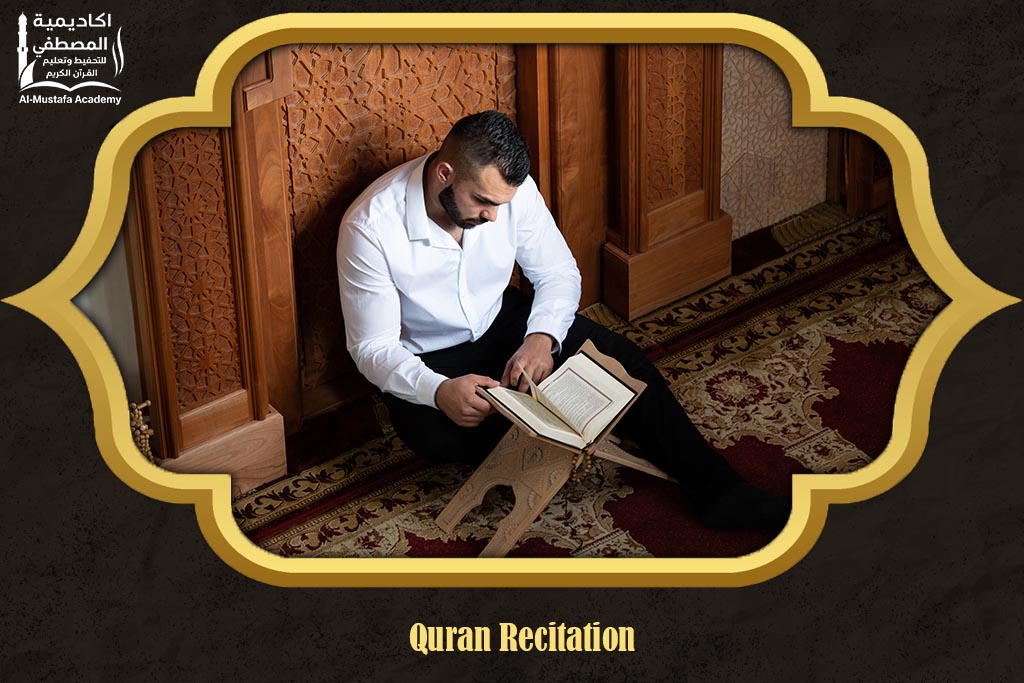
Quran recitation is a deeply spiritual and significant practice in Islam, reflecting a sacred connection between the believer and the words of Allah. It involves not just reading the Quran, but reciting it with correct pronunciation, rhythm, and adherence to the rules of Tajweed. For millions of Muslims around the world, reciting the Quran is a daily act of worship, a source of guidance, and a means of spiritual elevation.
Whether you are a beginner just starting your journey or someone seeking to refine your recitation, understanding the principles, rules, and benefits of Quran recitation is essential. In this article presented by Al-Mustafa Academy, we will explore what Quran recitation truly means, why it matters, and how you can improve your recitation with proper techniques and resources.
10 Benefits of Reciting the Quran Daily
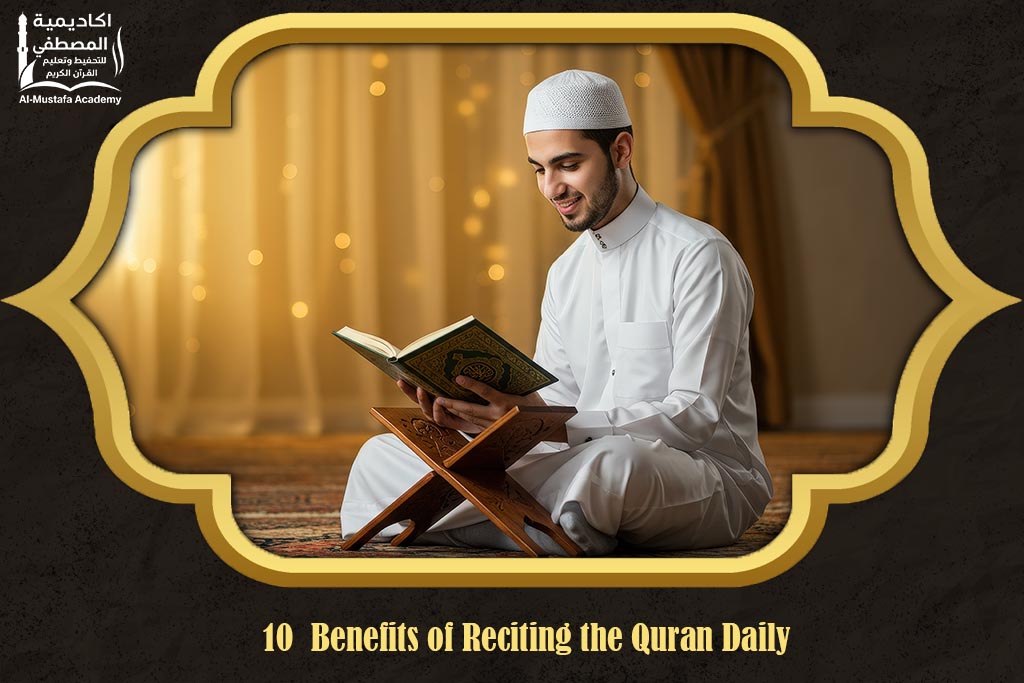
Reciting the Holy Quran on a daily basis carries immense virtues and blessings for both the heart and mind. Below are ten profound benefits of engaging with the sacred scripture regularly:
1. A Healing Remedy for the Heart and Soul
The Quran is described as a powerful cure for emotional and spiritual ailments such as sorrow, anxiety, and resentment. Its words bring inner peace, lightness of heart, and spiritual clarity. As stated in Surah Yunus, verse 57:
“O mankind! There has come to you advice from your Lord, and a healing for what is in the hearts—a guide and a mercy for the believers.”
2. A Constant Source of Guidance
The Quran holds treasures of divine wisdom that become accessible through daily recitation. As you read, certain verses will stay in your mind, urging you to reflect deeply or revisit them during moments of confusion. It becomes a personal guide in all areas of life.
To deepen this connection, it’s highly beneficial to enroll in Quran online recitation classes and study under the supervision of a qualified teacher.
3. Abundant Rewards for Every Letter
Each letter recited from the Quran is rewarded by Allah with multiple good deeds. Imagine the immense reward earned by simply reciting a page—or even a section—each day.
The Prophet Muhammad ﷺ said:
“Whoever recites a letter from the Book of Allah will receive one good deed, and each good deed is multiplied by ten. I do not say that Alif-Lam-Mim is one letter, but Alif is a letter, Lam is a letter, and Mim is a letter.”
[At-Tirmidhi]
4. Brings Blessings to Your Day
Beginning your day with Quran recitation invites blessings into your life. You will find your time more productive and your actions more purposeful. Over time, the Quran nurtures discipline and focus, extending benefits beyond spirituality into daily life.
5. Fulfills a Divine Command
Reciting the Quran fulfills Allah’s command as revealed in Surah Al-Muzzammil, verse 20:
“So recite whatever is easy for you of the Quran. And establish prayer, give zakat, and lend to Allah a good loan. Whatever good you send forth for yourselves, you will find it with Allah, better and greater in reward. And seek Allah’s forgiveness. Surely Allah is Most Forgiving, Most Merciful.”
6. Provides Answers to Life’s Questions
The Quran gives clarity on the purpose of life and human existence. It teaches that we are created to worship and serve Allah, and fulfillment lies in living by this purpose. During hardships, its verses provide comfort, encouragement, and reminders of Allah’s mercy and support.
7. Keeps You Firm on the Straight Path
The Quran acts as a beacon, illuminating the path of righteousness. Daily recitation helps one stay committed to doing good and avoiding sin. Like prayer, it has a transformative effect—leading the heart naturally toward obedience.
As mentioned in Surah Al-Isra, verse 9:
“Indeed, this Quran guides to what is most upright and gives glad tidings to the believers who do righteous deeds, that they will have a great reward.”
8. A Daily Reminder of the Day of Judgment
The Quran constantly reminds believers of the Hereafter, describing the events of the Day of Judgment and the outcomes awaiting both the righteous and the disbelievers. These reminders instill a sense of urgency to live righteously and strive for Paradise.
Neglecting Quranic recitation can leave one spiritually vulnerable to the temptations of worldly life and the whispers of Shaytan, causing forgetfulness of death and accountability.
9. Enhances Your Recitation Skills
With daily practice, your ability to recite the Quran improves significantly. You’ll notice greater fluency, fewer mistakes, and smoother pronunciation. Complementing your recitation by listening to professional Qaris will further enhance your accuracy and rhythm, enabling you to recite beautifully.
10. Brings Inner Peace and Tranquility
Reciting the Quran establishes a direct connection with Allah. This divine engagement brings a deep sense of peace, comfort, and spiritual fulfillment. Knowing that you are drawing closer to your Creator can ease the worries of the heart and bring serenity to the soul.
Read also: arabic language classes online
Discover Your Path to Quranic Knowledge with Al-Mustafa Academy
Join Al-Mustafa Academy today and embark on a journey of spiritual growth and knowledge. Whether you’re a beginner or looking to deepen your understanding of the Quran and Islamic studies, our expert instructors and flexible online courses are here to guide you every step of the way.
Enroll now and become part of a vibrant, global learning community dedicated to faith, excellence, and personal growth.

The Seven Canonical Recitations of the Quran
Asim
This recitation has been transmitted by two narrators: Hafs and Shu’bah. The narration of Hafs from Asim is the most widely used and recognized style of Quranic recitation across the Muslim world.
It is named after Hafs ibn Sulayman al-Asadi, who studied under the renowned scholar Asim ibn Abi al-Najud.
Asim, in turn, learned the recitation from Ali ibn Abi Talib (AS). Today, the Hafs recitation is the standard across most of the Muslim world.
The Shu’bah narration, also attributed to Asim ibn Abi al-Najud, is less common but still acknowledged and respected.
Ibn ‘Amir
This particular style of Quran recitation is narrated and transmitted through the authentic chains of narration by two renowned scholars of Qira’at: Hisham bin Ammar and Ibn Zakwan, both of whom are recognized for their precise and faithful preservation of the recitation methods attributed to the reciter Ibn ‘Amir.
Ibn Kathir
Narrated and transmitted through the reliable chains of narration by Al-Bazzi and Qunbul, this recitation represents one of the seven canonical styles of Quranic recitation, known for its precision, clarity, and association with the reciter Ibn Kathir Al-Makki, a prominent figure in the early generations of Qira’at scholars.
Nafi’
This recitation has been transmitted by Qalun and Warsh, both of whom learned from Nafi’ al-Madani.
While the Warsh narration is more widely known, the Qalun version is primarily used in parts of Libya.
The two narrations are very similar, with only slight variations in pronunciation and style.
Al-Kisai
Narrated by Leith and Al-Duri, this recitation is attributed to Al-Kisai, one of the prominent reciters of Kufa.
Hamzah
Narrated by Khalaf and Khallad, this recitation comes from Hamzah al-Kufi. It is primarily used in parts of Yemen and is known for its distinct linguistic and phonetic features, especially in the Khalaf narration.
Abu ‘Amr
This recitation is narrated by Hafs ibn ‘Amir and Susi Saleh. Although attributed to Abu ‘Amr ibn al-‘Ala, it was transmitted through Ibn ‘Amir.
Tajweed Recitation
quran recitation tajweed refers to the practice of reciting the Quran with precise pronunciation, rhythm, and adherence to the established rules of phonetics and articulation. It is more than just reading—it is a disciplined art that ensures the Quran is recited as it was revealed, preserving its meaning, beauty, and spiritual impact.
At the heart of Tajweed is the correct vocalization of Arabic letters and sounds, which is essential for anyone learning Quranic Arabic. By mastering Tajweed, learners develop the ability to pronounce each letter from its proper articulation point (makhraj), observe rules of elongation (madd), and apply principles of pausing and stopping (waqf and ibtida’), all of which contribute to a smooth, melodious, and respectful recitation.
Tajweed also enhances one’s familiarity with Quranic sentence structure and rhythmic flow. Repeated listening and recitation help students internalize the patterns of Quranic Arabic, making the language more accessible and meaningful.
At Arab Academy, experienced teachers provide personalized instruction in Tajweed, offering real-time feedback as students recite. They correct mispronunciations, guide rhythm and intonation, and help learners avoid common recitation errors. These instructors serve not only as teachers but also as role models in Tajweed recitation—enabling students to refine their skills by listening, mimicking, and gradually mastering the art of Quranic recitation.
Learn more: what is the quran
Quran Recitation Rules
Mastering the rules of Quran recitation is essential for anyone seeking to recite the Holy Quran with accuracy, clarity, and reverence. These rules, known as Ahkam al-Tilawah, guide how to properly pause, stop, and continue during recitation, ensuring the preservation of the Quran’s meaning and eloquence. Many of these rules are indicated by special symbols and marks throughout the text—such as Waqf e Lazim (مـ) for a compulsory stop, Waqf e Mutlaq (ط) for an absolute pause, and Waqf e Jaaiz (ج) for a permissible stop.
Others, like Waqf e Mujawwaz (ز), suggest continuation, while Saktah (س) and Waqfah (وقفه) indicate brief pauses without breaking breath. Unique symbols like Waqf al-Nabi (وقف النبي) reflect where the Prophet Muhammad (PBUH) himself paused during recitation, while Waqf e Manzil marks where the angel Jibreel (A.S) paused during revelation.
Additional marks such as La (لا) and Qif (ف) caution against stopping, as doing so could alter the meaning of the verse. Reciters are also guided by rules regarding where they can or cannot begin a new recitation—avoiding starts that distort meaning or break context.
Furthermore, there are specific etiquettes for reciting the Quran: maintaining ablution (wudhu), dressing modestly, sitting respectfully, beginning with Ta’awwudh and Basmala, and ending with Sadaqallahul Adheem. Above all, reciting with Tajweed—the science of proper pronunciation—is vital for preserving the sacredness and integrity of the Quranic message. These rules and manners not only enhance the spiritual experience but also reflect deep respect for the divine words of Allah.
Join Our Quran Recitation Course
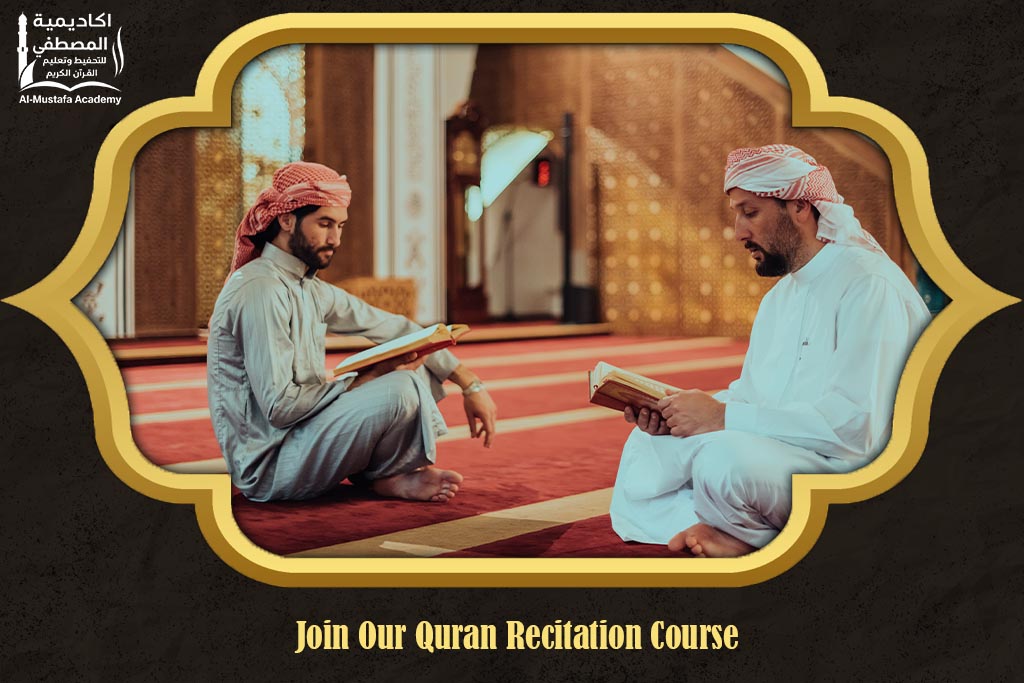
If you’re interested in learning more about the Quran’s recitation styles, mastering various forms, discovering top Qaris, or aspiring to become a skilled reciter yourself, we warmly invite you to join our academy Al-Mustafa Academy .
Our course is designed to guide you on your journey to becoming an exceptional Qari. Whether your goal is to recite with beauty and clarity or to master Tarteel—the art of melodious, rhythmic recitation—this program is ideal for you.
There are seven melodic modes (Maqamat) in Tarteel, each capable of expressing different emotions such as joy, sorrow, warning, and reflection. As part of the course, you’ll learn two Maqams at a time, practicing how to match the melody to the meaning of the verses for a truly expressive recitation.
In conclusion, Quran recitation is far more than a verbal exercise—it is a spiritual discipline that connects the heart, mind, and soul with the divine message of the Quran.
By learning the rules of Tajweed, understanding the symbols and pauses, and maintaining the proper etiquette, every Muslim can experience the true beauty and depth of the Quran.
Whether you’re reciting for personal growth, memorization, or worship, approaching the Quran with sincerity, knowledge, and reverence will bring immense spiritual rewards.
Begin your journey today, and let Quran recitation become a daily source of peace, guidance, and divine connection in your life.